
Asked whether he had ever cautioned restraint from a director, the film producer Jeremy Thomas replied: “My nature would be to go further and see what we can get away with.”
Thomas, who has died aged 77, was an expert in getting away with it. A taste for irreverence ran in his family: he was the son of Ralph Thomas, director of the Doctor … comedies that began in 1954 with Doctor in the House, and the nephew of Gerald Thomas, who made all 31 Carry On titles. Jeremy’s own films, however, were risky rather than risque.
Bad Timing (1980), the first of three collaborations with the director Nicolas Roeg, explored a destructive love affair blighted by jealousy, attempted suicide and rape. Rank, the studio behind it, withheld from the start of the print its familiar company ident showing a man striking a gong. According to Thomas, the studio also denounced the picture as “a sick film made by sick people for sick people”.
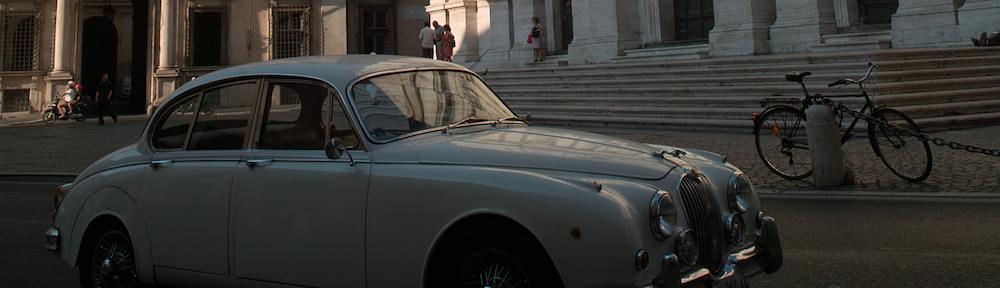
He teamed up on several occasions with David Cronenberg, first for an adaptation of William S Burroughs’s Naked Lunch (1991), featuring a sentient, fleshy typewriter that talks through its anus, and most infamously for a film of Crash (1996), JG Ballard’s novel about a group of outsiders who get their sexual kicks from car accidents.
The furore began at the film’s premiere in Cannes, where it was awarded a prize against the wishes of that year’s jury president, Francis Ford Coppola, and then spilled on to UK tabloid front pages. The Evening Standard said Crash went “beyond the bounds of depravity”; the Daily Mail’s sustained calls for it to be banned were heeded by Westminster council, which blocked screenings in the borough. However, the RAC suggested the film might have a useful educational dimension.
Controversy was a by-product of Thomas’s work rather than a goal. His greatest success was The Last Emperor (1987), based on the autobiography of Puyi, from the Qing dynasty, who was made emperor of China in 1908 at the age of three before being exiled 16 years later.
This sumptuous epic, which took four years to make and went on to convert all nine of its Oscar nominations into prizes, was fraught with its own risks and obstacles. “If I’d thought about what we were going to do and how we were going to do it, I’d never have done it because it was impossible,” Thomas said.
He raised the $25m budget and pulled off the coup of making this the first – and, to date, only – western production allowed to shoot inside China’s Forbidden City.
The director Bernardo Bertolucci believed in him from their first meeting. “The films [Thomas] had produced all required courage and ambition. He was the indie producer we all dreamed of.” He saw in Thomas the “enthusiasm of a teenager … and the reassurance of a teddy bear. I decided on the spot to put the film in his hands.”
Accepting the best picture Oscar, Thomas was so taken aback that he neglected to read the acceptance speech that he had written. He managed, though, to point out that the award was “a real affirmation for me that independent cinema can be both epic and popular”.
He and Bertolucci turned next to an adaptation of Paul Bowles’s The Sheltering Sky (1990), in which an alienated US couple (Debra Winger and John Malkovich) lose themselves in postwar north Africa. Shooting in locations including Niger and Algeria, Thomas called the production “complete lunacy” beset with “lots of illness and difficulties … Like the characters, we nearly went too far.”
Throughout his career, he was drawn to challenging and provocative material. “The further you get away from the centre, the more original the work is,” he said.
Examples included Nagisa Oshima’s homoerotic wartime drama Merry Christmas, Mr Lawrence (1983) starring David Bowie, Jonathan Glazer’s electrifying gangster thriller Sexy Beast (2000), Richard Linklater’s fictionalised exposé Fast Food Nation (2006), Jim Jarmusch’s Only Lovers Left Alive (2013) with Tom Hiddleston and Tilda Swinton as hip vampires, and several thrillers by Takashi Miike including 13 Assassins (2010) and First Love (2019).
In The Storms of Jeremy Thomas (2021), an affectionate documentary by Mark Cousins, Swinton calls Thomas “so rock’n’roll” and likens him to a “pirate”. Winger says he is “searingly bright, has incredible taste, is totally playful and can be very serious. All that at once.”
He was born in London to Ralph and Joy (nee Spanjer), and educated at Millfield school in Somerset. His earliest memory was playing on the set of Carry On Sergeant in 1958.
“I was born in Ealing near the studios, moved to a country house near Pinewood, where I grew up around people who I didn’t realise were Katharine Hepburn, Brigitte Bardot and Dirk Bogarde.”
Shunning further education in favour of following in his father and uncle’s footsteps, Thomas had his first jobs in processing laboratories and editing rooms. Early credits as assistant editor included the folk-horror Tam Lin (1970), which was the only film to be directed by the actor Roddy McDowall, Ken Loach’s uncompromising drama Family Life (1971) and the reggae-themed hit The Harder They Come (1972).
He made his producing debut with Mad Dog Morgan (1976), an early example of the Ozploitation genre, starring Dennis Hopper (“In the most extreme stupor of excess,” Thomas said) as a real-life 19th-century bushranger.
This and subsequent projects amounted to a kind of maverick mission statement. Jerzy Skolimowski’s The Shout (1978), starring Alan Bates as a man whose voice can kill, was followed by Julien Temple’s Sex Pistols celebration The Great Rock’n’Roll Swindle (1980). After Bad Timing came two more films with Roeg: the ambitious but maligned Eureka (1983), starring Gene Hackman as a prospector whose life falls apart once he strikes gold, and Insignificance (1985), adapted from Terry Johnson’s play about an imagined meeting between Marilyn Monroe and Albert Einstein.
Thomas produced The Hit (1984), Stephen Frears’s philosophical road movie with John Hurt and Tim Roth as gangsters escorting super-grass Terence Stamp to his execution. He joined Bertolucci again for Little Buddha (1993), starring Keanu Reeves as Prince Siddhartha, the pre-enlightenment Buddha; Stealing Beauty (1995), about a teenage girl (Liv Tyler) on holiday in Tuscany; and The Dreamers (2003), set against the backdrop of the May 1968 protests in Paris.
In 1999, he made his only film as director. All the Little Animals, adapted by Thomas’s wife Eski from Walker Hamilton’s novel, was a fable starring Christian Bale as a fragile runaway befriended by a woodland hermit (Hurt) who lovingly buries roadkill.
Though admitting it was “a very naïve kind of film,” Thomas declared himself “very happy to have done it”.
He returned to Ballard, whom he described as “my Melville”, by producing Ben Wheatley’s film of High-Rise (2015). Wheatley called Thomas “almost like a genre himself: the last of the great cigar-smoking producers”.
Thomas was also unusual in co-founding his own sales company, HanWay Films. Its 500-strong catalogue was, said Thomas, “looked after and tended like a garden. I’m still looking after my films in the catalogue and trying to get other people to look after their films … to try to keep them alive. A film has to be run through a projector to be alive, unfortunately, and those electric shadows are few and far between now.”
Two of his newest projects premiered at festivals this month: Miike’s Bad Lieutenant: Tokyo was set to make its debut in Toronto, while Werner Herzog’s Bucking Fastard, starring Kate and Rooney Mara as twin sisters who speak in sync with one another, competed in Venice.
Thomas is survived by his three children: Jessica, from his first marriage to Claudia Frolich, which ended in divorce in 1981, and Jack and Joshua, from his marriage to Eski (nee Vivien Coughman), who died in 2023.
• Jeremy Jack Thomas, film producer, born 26 July 1949; died 11 September 2026
