
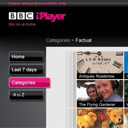
Today's launch of the trial version of the iPlayer broadband TV service represents a watershed in the multi-media strategy of the BBC, although usage issues and limited appeal for watching video over PCs means it is likely to remain a niche product, according to a new report.
The arrival of the iPlayer, which will have a full launch later this year, means that all the main terrestrial UK broadcasters now have PC-based media players, with ITV due to complete the roll-out of its streaming-based service next week.
However, a report from financial advice and research firm, Enders Analysis, on the broadband TV market - which includes a look at the likes of Babelgum and Joost - is sceptical about the take-up of such services.
"The TV is the locus of family entertainment and the PC cannot replicate its appeal," says a report. "The TV's advantages (including the rise of video-on-demand and PVRs) are difficult for PC-delivered internet video services to match."
Enders pointed out that there are technology issues, such as current standard 2MB broadband speeds, which mean many viewers will be frustrated by download times of TV shows.
"We consider download as mainly appropriate for appointment viewing, not impulse viewing, making it a closer substitute for the DVD experience than for TV," said the report.
Another analyst added that usage issues on the iPlayer make it simply too restrictive. There is no "bookmarking" capability, this source said, so if someone goes on holiday for longer than the seven day iPlayer catch up window then that show cannot be watched when they return.
"The public value test also takes too long and stifles innovation at the BBC," said the analyst. "I am all for governance but it needs to be speeded up."
Drawbacks notwithstanding, the launch of the all of the major UK broadcasters' media players should be seen in the context of a learning curve for a rapidly changing digital media market.
"The iPlayer is really positive, potentially one of the most important developments in the BBC since the introduction of TV," says Adam Daum, a media analyst at Gartner.
"However, today there are lots of shortcomings in the iPlayer and it will certainly have no dramatic impact in the short term but in the long term it is strategically very important."
Enders cited comScore data showing that Channel 4's 4oD broadband TV website had 450,000 unique visitors in June and predicted that the number actually using the application is "far smaller".
The firm argued that it is Freeview households, which do not have personal video recorders and TV video on demand services but do have broadband connections, which will drive demand for broadcasters' internet video services.
By 2011, it estimates that 11 million broadband households will adopt PC-based internet video services.
Enders also forecasts that 9 million households will use the iPlayer, with 1.3 people per household watching catch-up TV, which translates to 12.6 million viewers.
It estimates by 2011 the iPlayer will generate something like 8% of all BBC TV viewing, including live and on-demand.
This is less, said Enders, than the BBC's predictions, which are for 7.5% of BBC TV consumption for catch-up TV, plus another 3.8% for simulcast TV.
"Overtime it will become a brilliant tool, at the moment the iPlayer we see is an interim solution," says Mr Daum.
"It took 10 years for colour TV to get a decent installed base, this move is about making the BBC a serious player in on-demand services on the internet and not just a traditional public service broadcaster."
· To contact the MediaGuardian newsdesk email editor@mediatheguardian.com or phone 020 7239 9857. For all other inquiries please call the main Guardian switchboard on 020 7278 2332.
· If you are writing a comment for publication, please mark clearly "for publication".
