
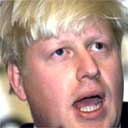
He once told his constituents not to contact him by email, and his secretary has in the past claimed he doesn't own a mobile phone, but Spectator editor Boris Johnson has belatedly placed himself at the vanguard of the digital revolution by becoming the first Tory MP to launch an online diary.
The Conservative MP, Telegraph columnist and sometime Have I Got News for You host might like to portray himself as the ultimate young fogey but in one fell swoop he has aligned himself with the most web-literate in Westminster by acknowledging the growing influence of blogging.
Following trenchant criticism of MPs for failing to keep pace with the online revolution by not keeping their websites up to date and failing to respond to emails, one of the unlikeliest internet zealots has promised to keep readers updated in a daily diary at boris-johnson.com.
Pre-empting the inevitable questions regarding his belated conversion to the internet age, Johnson explains in his first entry the reasons for launching the blog.
"Hi folks, this is Boris Johnson here. Welcome to my blogsite, where I hope to be blogging for some time to come.
"You may ask yourself why on earth I am filling the electronic ether with yet more of my stuff, given that I can already be discovered in the pages of the Henley Standard, Daily Telegraph, Spectator etc. It is a damn good question," said Johnson.
"The answer is that very persuasive man called Tim has recently been to my office in the Commons. He told me that blogging is the future. He spoke of the online community, and its rapid expansion. He said that newspapers were outmoded.
"He spoke of a new kind of politics. He waved his hands and rolled his eyes. So I have acceded to his advice, and begun to blog," he added.
The informal online medium, which allows anyone with only a basic grasp of the internet to launch their own website, has moved increasingly into the mainstream in the past year.
An army of enthusiastic amateur bloggers is covering the US election and much of the evidence that proved that the documents that caused such embarrassment to CBS were fake was collated by bloggers.
In the UK, Labour MP Tom Watson and Liberal Democrat Richard Allan are among the MPs who have pioneered the use of blogging to have an ongoing dialogue with their constituents.
But the use of the medium is not without its pitfalls. A spoof section on Mr Watson's site parodying attempts by politicians to connect with the young - "Tom's well-up on the Interwebnet, and he won't harsh your buzz or dis you down the line" - was seized on by some papers who took it seriously and failed to get the joke.
Johnson was persuaded to launch his blog by Tim Ireland, the same keen blogging advocate who produced Mr Watson's weblog and is head of online marketing for Surrey-based web design agency Screen Pages.
"Tim tells me that the idea is that I fall out of bed every morning, blazing with inspiration, and thunder out 3,000 words on the issue of the hour, so generating a pandemic internet controversy," explained Johnson on his site.
"I am not sure, frankly, that I will manage that. But I hope that there will be some other bloggers out there who may feel moved to give me some advice - not least on the funding of the arts, to which I am now devoting my meditations," he added.
Mr Ireland has been campaigning for more MPs to launch their own blogs for well over a year, encouraging constituents to set up their own "proxy blogs" on behalf of their MPs in the hope they will get the message.
"Many MPs seem to be afraid of what the public might say, but the moveable type system allows for easy moderation of posts and the community that forms around a weblog also acts as a natural regulatory body," said Mr Ireland.
"Weblogs are commonly described as online diaries and I think this throws a lot of people off because it leads to an assumption that the entries must be daily and must be deeply personal.
"This leads to a fear that running a weblog will somehow compromise MPs or take up too much of their time - so I'm hoping that having someone like Boris blogging will help dispel these and other common misconceptions," he added.
The Henley MP said that he was hopeful of being able to fit the blog around his other writing, editing and parliamentary commitments.
"As far as I can tell, it's as easy as typing an email. The only difference is, it's published on a website and accessible to anyone within seconds. And thanks to the way that glorious machine Google works the information I publish is far more likely to reach those who might be interested in it," he said.
· To contact the MediaGuardian news desk email editor@mediatheguardian.com or phone 020 7239 9857
· If you are writing a comment for publication, please mark clearly "for publication".
