
Nokia's Spring offensive on the mobile market makes it clear that many picture phones will now start morphing into video cameras while others will acquire new features like being a pocket torch.
A lot of recent adopters would be grateful if their existing camera phones could send pictures across networks before new features are added - but that is not the manufacturers' fault. For what it is worth the buzz is that the problems surrounding cross-networking (due to billing problems rather than technical factors) should be sorted before the end of the first quarter of the year.
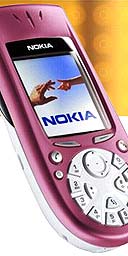
As usual, Nokia is customising phones to particular social markets. I had a brief test this morning of some of the models being released in the coming months and there is certainly something for everyone. Using the 3650, due in the shops in early March, I took nearly 20 seconds of live video without any trouble and played it back at once without any problems. The definition wasn't brilliant but adequate.
The amazing thing is that it happens at all as an add-on to a phone weighing 130g. At the moment there is no sound (though you can download talking video from a web site if you want to) but you will be able to send these video clips to friends (if not yet to Hollywood) via multimedia messaging. There is no built-in radio but you can get Radio 4 and other channels through streaming audio (but be careful if you are being billed by the data you use). It also features Bluetooth, Java, triband and polyphonic ring tones.
If you want sound with your video recording then the 6650, also due in the second quarter, may be for you. It takes up to 30 seconds of video recording with better definition than the 3650. And so it should, as it is one of the first of the 3G (third generation phones). You can use it on the existing GPRS (general packet radio services) which is always-on the internet; but to realise its full potential it will be better to wait until the 3G infrastructure - for which the operators paid £22.5bn in the infamous auction a few years ago - becomes operational. Customers of T-Mobile, meanwhile, can convert one of Nokia's existing camera phones (the 7650) into a video camera by downloading software from Hantro's web site at www.hantro.com.
I tried two other phones that will also generate interest. One is the 7250 (basically the 7210 with a built-in camera) which includes a radio, GPRS, HSCSD (high speed circuit switched data), stopwatch and a Pop-port interface for identification, stereo audio and fast data connectivity.
The other is the splash-proof and very funky 5100 that not only incorporates a flashlight (the first I have come across on a phone) but also a radio, a thermometer, a sound meter and a calorie counter. Whatever next?
Nokia's main lunge at the corporate market this Spring will be the impressively designed 6800 which is a cross between its successful Communicator and an odinary phone. It looks like a phone but opens out like a horizontal clam shell into a sprightly qwerty keyboard either side of the (colour) screen. Weighing in at 122g with a radio and the usual emailing, calendar, organiser and messaging facilities, it is aimed at the businessman on the move who doesn't want to be weighed down by a palm or Pocket PC organiser.
There is no camera though it can be had as an attachment and, more surprisingly, no Bluetooth, as if they are not expecting roving businessmen to use it in their cars. It is easy to navigate around with the usual features of the Symbian operating system that Nokia is wedded to. Its corporate attractions will be greatly boosted when Nokia, as it is planning to, adds Blackberry software to it enabling emails to come directly to the screen (and announce their arrival each time with a "pip") This may not be included in the early versions in March. It is likely to be priced in the £250 to £300 range before operator discounts.
