This election season, it's about where candidates stand. Literally. In these 2010 midterms, we see the makings of the next wave of political technology, based on GPS/SatNav systems that are built into smart phones, now owned by nearly half of all Americans.
Each election season, politicians and their consultants have sought the holy grail of American politics: successful use of technology to win votes. Governor Howard Dean was the first to crack the code, using the internet to build a grassroots base for his presidential run.
Then Barack Obama built a multifaceted online campaign that became a genuine movement, deploying new technologies, from fundraising competitions to automated phone-canvassing (a volunteer in Manhattan could be connected via the internet to a swing voter in Minnesota to make the case for Obama for president). That whole operation became the gold standard – the operation to beat.
So far, nobody has done so. But they're trying.
"Location-based networks" – like foursquare, Gowalla, and Facebook Places – may be part of the new equation. These services allow users to share their location with their friends and "followers". So if the user walks into a restaurant – or a politician walks into a rally – they "check in", alerting their friends and voters of their whereabouts.
Yes, it sounds stupid. Yes, it has been abused. One internet service, named Please Rob Me, is dedicated to "raising awareness about over-sharing" by alerting how the technology could be used to advise would-be criminals about when individuals were not at home.
But use of these services is growing exponentially. Foursquare, for example, has surpassed 3 million users; it is growing faster than Twitter. The site offers awards or "badges" to individuals who check in to certain places (the local library, for example). And as Tim Miller, a Washington digital consultant, explained to me: "Foursquare even has political ties, offering users the 'mayorship' of a location to the person who 'checks in' the most." The service, aware of its potential for political use, will offer sought-after electronic badges on election day for those who vote.
Campaigns are still cautious and unsure about the use of this technology. It could cause a security nightmare. And, for now at least, it certainly benefits underdog candidates.
The first politician known to have started using foursquare in his campaign is former MTV journalist Patrick Kennedy, an underfunded Democrat running for congressman in Arkansas. Since March, he has used the service to tell would-be voters where he will be travelling, to encourage them to meet him and discuss his policies, as well as to demonstrate the extent to which he is racing across the length and breadth of the district.
Candidates have long been accused of letting television advertising do their travelling for them, restricting their appearances with "real people"; now, foursquare and similar services keep them accountable. Since Kennedy's foray into "locational advertising", dozens of candidates have chosen to tell voters exactly where they are, inviting them to join in a direct political dialogue.
As usual, Democrats are ahead of the curve. Organising for America, the continuation of the Obama internet movement outside the White House, is using an application that locates volunteers and enthusiasts to tell them exactly which voters in their immediate vicinity they should canvass. Precision targeting, to be sure.
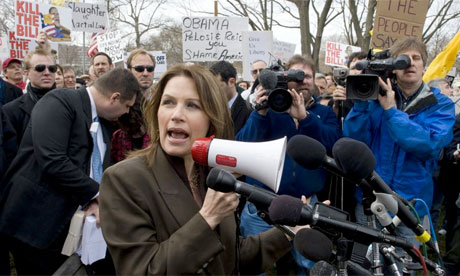
But Republicans have been remarkably ingenious, as well. During this summer's Minnesota state fair, Representative Michele Bachmann took aim at her rival, Tarryl Clark. Using Google technology, she sent advertisements to the 12,500 smart phones of those at or near the fair, accusing her opponent of seeking to tax the types of foods sold there; gourmet delights such as Pronto Pups and cheese curds. The charge against Clark was inaccurate, but that hardly mattered. This was the first example of a trend we're likely to see more and more.
As voters get larger amounts of their political information through "unconventional" means, campaigns will focus on sophisticated precision technologies that allow the targeting of locations, demographics and proclivities. It's like using a smart missile to target an individual rather than the haphazard blanket bombing which is television advertising.
As the progression of these technologies proliferate, they are likely to help Democrats. Washington's leading Democratic strategist, Steve Elmendorf, told me: "The most impressive use of social media has always engaged younger voters. And that, in turn, always gives Democrats the edge."
These are exciting technologies. Watching how they change campaigns will be fascinating. But in the end, no matter how sophisticated the technology, the main considerations will still apply when running for office: developing a message that appeals, being a charismatic candidate and – sometimes, just sometimes – suggesting good policies.
