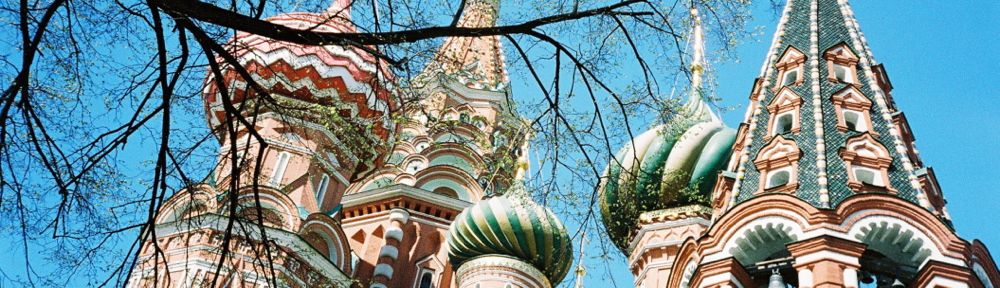

John Kennedy’s US signalled to the Soviet Union that it was firmly in the race to the Moon when astronaut John Glenn was blasted off from Cape Canaveral in Friendship 7 and became the first American to orbit the Earth. After three flips around the globe, his space vehicle splashed down in the Atlantic
Photograph: NASA/Roger Ressmeyer/CORBIS Photograph: Action images
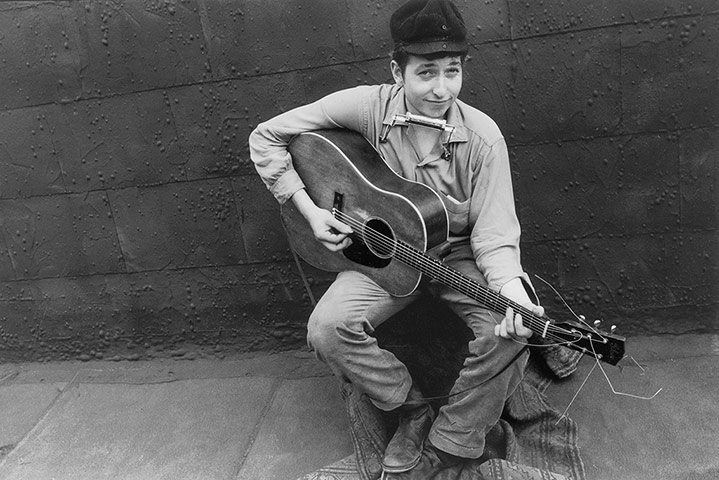
Bob Dylan first performed Blowing in the Wind on 16 April in a club on West 4th Street, New York Photograph: John Cohen/Getty Images
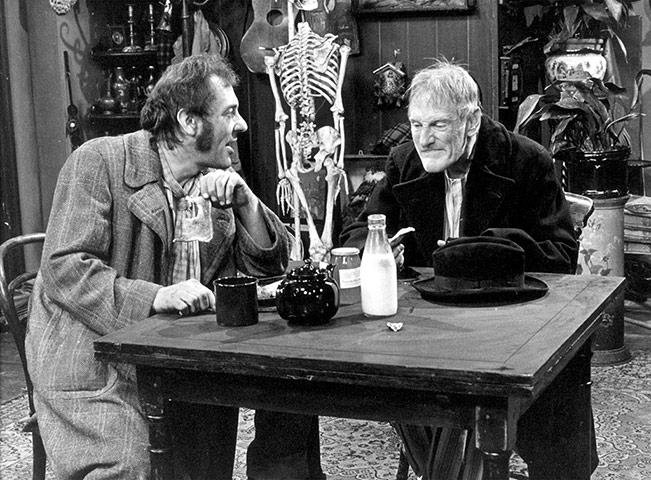
The BBC broadcast the first episode of the sitcom Steptoe and Son on 14 June, starring Harry Corbett and Wilfred Brambel Photograph: BBC
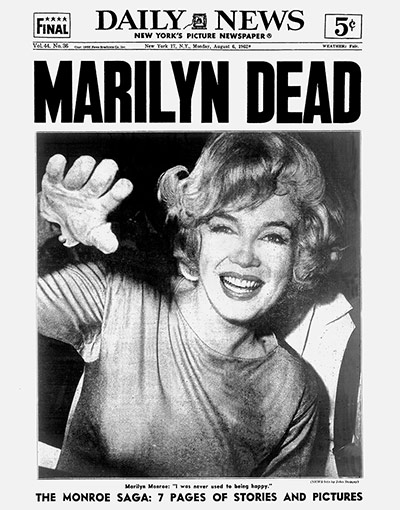
Marilyn Monroe was found dead at her home from an overdose, dramatically ending her decade-long reign as the world’s most glamorous film star. Rumours persist that she had been the lover of both President Kennedy and his brother, Bobby Photograph: New York Daily News Archive/Getty Images
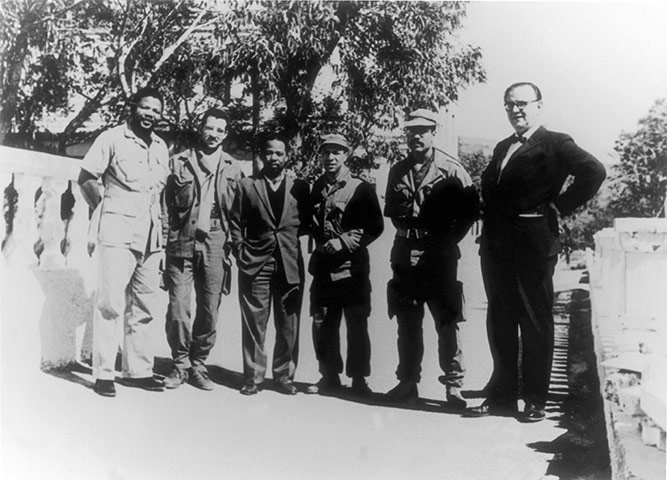
The leader of the African National Congress was arrested in South Africa on 6 August. Mandela was later convicted of sabotage and given a life sentence Photograph: Gamma-Keystone/Getty Images
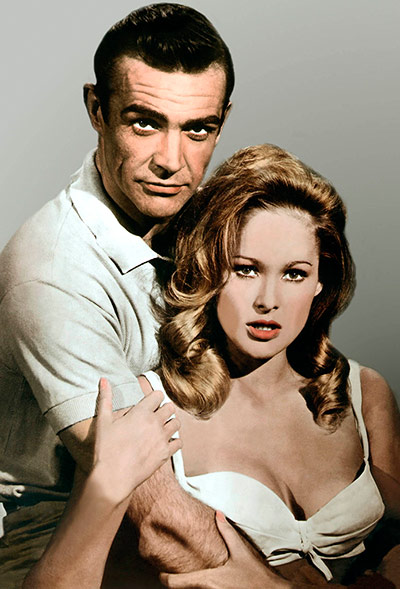
As the cold war seemed about to hot up with the Cuban confrontation, Ian Fleming’s creation James Bond made his bow on the big screen with Dr No. The low-budget venture had a mixed critical reception but did well at the box office. It also set the mould for Sean Connery’s playing of the charismatic 007 and his fund of mannerisms and key phrases Photograph: Allstar/Cinetext Collection
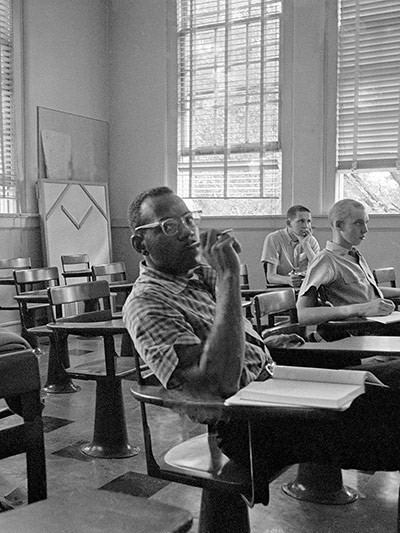
Amid rioting and protests, James Meredith was the first black student to attend the previously all-white University of Mississippi. He had to be escorted on to the campus by US marshals in what became a pivotal moment for the American civil rights movement Photograph: AP
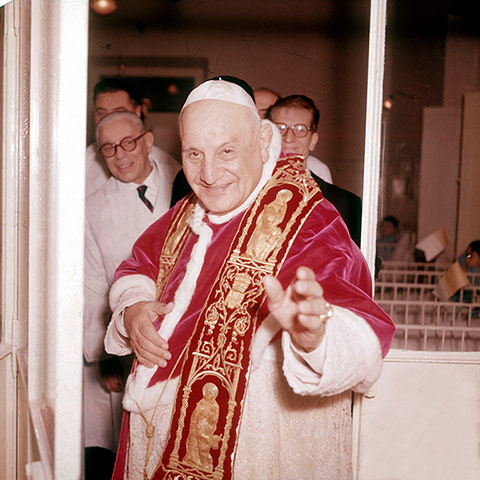
Pope John XXIII convened a process intended to make the Roman Catholic church address the issues of the modern day. The council lasted three years in all, and led to far-reaching liberalisation, a greater voice for worshippers beyond Europe, and dialogue with other Christian churches Photograph: Gamma-Keystone/Getty Images
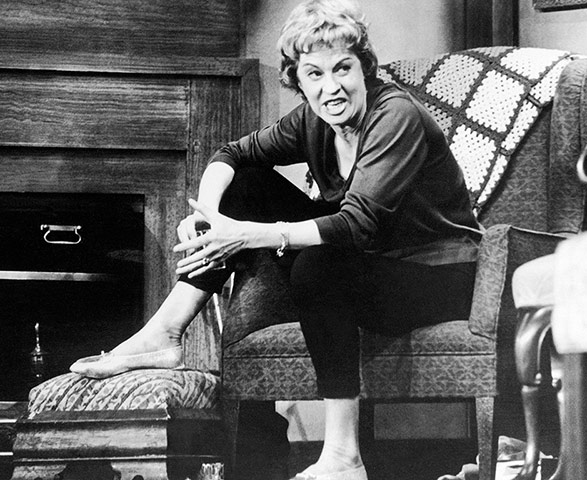
Uta Hagen starred in the premiere of Edward Albee's play Who's Afraid of Virginia Woolf, which opened on Broadway on 14 October Photograph: AP
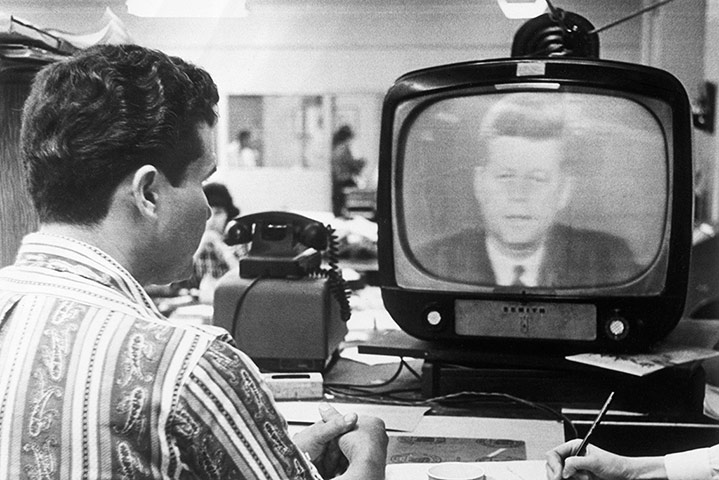
When a US spy plane identified nuclear missile launchers in Cuba, President John F Kennedy called on the Soviet leader Khrushchev to remove them and halt the shipping of more missiles. For a few days the planet seemed to face Armageddon. Then Russia’s leader “blinked” and the world could breathe again Photograph: Bettmann/Corbis
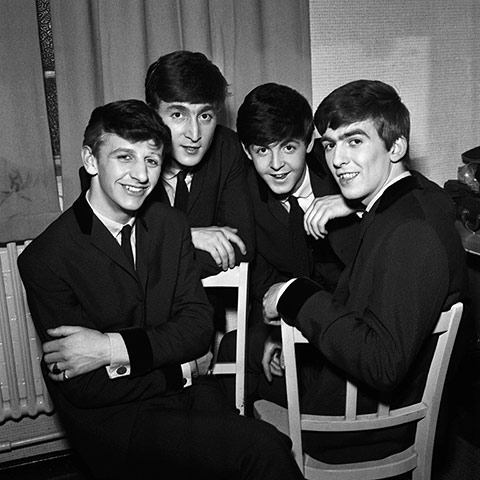
In January the Beatles’ first recording, My Bonnie, came out, but the autumn onslaught of this number with Lennon’s blues-inflected harmonica really captured the nation’s attention. Throughout the decade, the Beatles’ ever-evolving music would enter the record-buying public’s bloodstream like a drug Photograph: V&A Images/Getty Images
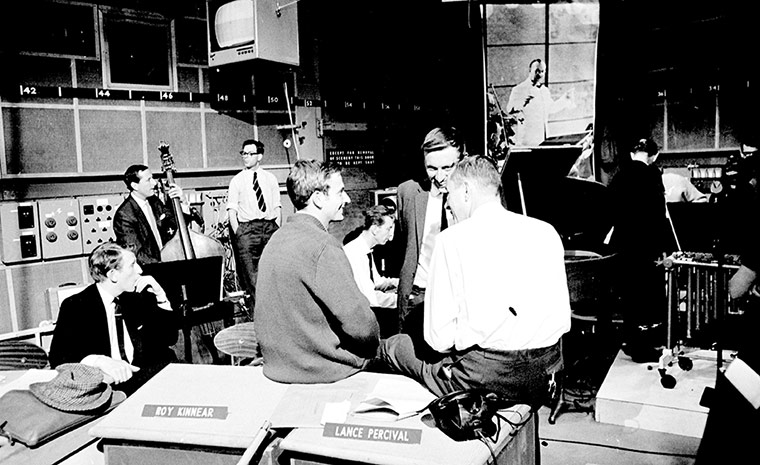
On 25 November the first episode of the satirical series That Was The Week That Was aired on the BBC Photograph: BBC
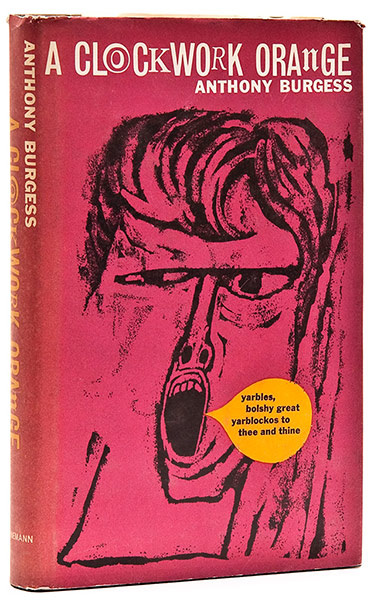
Anthony Burgess’s novel offered a dystopian view of the future. A tale of youth rebellion and violence, it was told in a language full of Russian-influenced argot. Later, in the 1970s, it would be made into a controversial film directed by Stanley Kubrick
Photograph: public domain Photograph: other
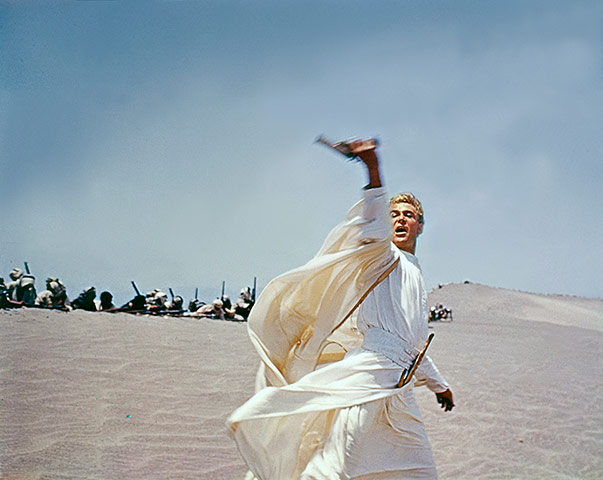
David Lean's epic film, starring Peter O'Toole, premiered in London on 10 December Photograph: Sunset Boulevard/Corbis
