
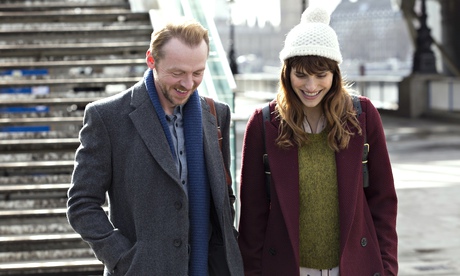
“When you’re writing a romcom, you’re writing chemistry on to the page,” observed screenwriter Tess Morris recently, writing for Bafta on that least fairly credited of film genres. Having written Man Up (Studiocanal, 15), fortunately, she’s in a position to talk. A cleverly but comfortingly structured romp of mistaken identity and stolen opportunity, it’s a rare contemporary romantic comedy in which attraction doesn’t seem predetermined; its characters actually work toward an appreciation of each other. That’s despite one of the more neatly contrived premises the genre has seen in recent years: boy mistakes girl for his blind date, girl runs with the charade, hijinks ensue.
Morris’s quick, quippy script writes chemistry into this farcical setup; luckily, the casting follows suit. Simon Pegg’s had a duff run of film vehicles as a leading man, but here’s one that puts his neurotic dork persona in a sweeter light. The real revelation, however, is nimble American actress Lake Bell, following in the footsteps of Renee Zellweger’s Bridget Jones to give us an improbably great Britcom heroine of equal parts gawkiness and gumption.
Taking a looser, lower-key approach to romantic comedy form, but with results that are no less pleasing, is Results (Kaleidoscope, 15) – the latest gentle chatfest from US indie auteur Andrew Bujalski. Once dubbed the godfather of mumblecore, Bujalski has stepped back ever so slightly from the scruffy, low-fi sensibility of that much-derided movement: there’s a light coat of polish on this tale of loves lost and found in, of all places, an Austin gym called Power 4 Life. For the first time in his career, Bujalski has cast professional actors, and good ones: there’s fine, against-type work here from Guy Pearce and Cobie Smulders as tightly wound trainers and ex-lovers, with an endearing Kevin Corrigan as the schlubby client who comes between them. Bujalski wryly pokes fun at the self-inflicted intensity of fitness culture, though not at the expense of his internally imperfect trio.
This week’s romcom roll, alas, grinds to a leaden halt with Ruth & Alex (Signature, 12), an anodyne puffball starring Morgan Freeman and Diane Keaton – both on agreeable autopilot – as a long-married couple given no dilemma greater than whether or not to sell their nice apartment in Brooklyn for a nice flat in Manhattan. With no Kirstie Allsopp on hand to help them, the process is too sluggish by half.
On to more harrowing matters, with British director Daniel Wolfe’s abrasive, impressive debut Catch Me Daddy (Studiocanal, 15) taking on the nervy topic of honour killings in the Muslim community with a mixture of raw violence and sensory grace. Fashioned as a spare chase thriller, following a British-Asian teen (first-time actress Sameen Jabeen Ahmed) and her white boyfriend (Conor McCarron) as they seek refuge from her pursuing family on Yorkshire’s mistiest moors (below), the film accumulates stomach-knotting tension even as it maintains a reticent distance from the hunters and hunted alike. It’s the images that speak loudest here: genius cinematographer Robbie Ryan can conjure rhapsodic atmosphere from a corner shop, and he gifts Wolfe’s bleak vision with blood-edged beauty.
You’ll probably do more nail-biting in Wolfe’s film than in Spooks: The Greater Good (Entertainment One, 15), a pretty flat film revival of the retired BBC spy series that, with a new lead in Game of Thrones’ Kit Harington, offers fans only a nominal sense of nostalgia. As a freestanding espionage thriller, it ticks along capably enough, but all feels a bit small stakes relative to the post-Bourne films it’s emulating.
Two years ago, Nigerian director Chika Anadu made a strong, purposeful impression at the London film festival with her debut film, B for Boy, a candid, clear-eyed appraisal of class and gender politics in contemporary Lagos. This story of a wealthy professional woman driven to desperate measures to produce a son for her husband deftly balances universal social imbalances with more explicitly regional ones, with an aching human centre in Uche Nwadili’s remarkable lead performance. Sadly never picked up for a UK release – still a familiar fate for a wide range of black-focused cinema – the film happily surfaced on Netflix this month. It’s an all-too-rare sighting of African cinema on the streaming service. I hope the wave starts here.
