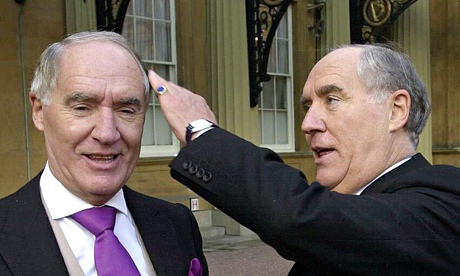
Ah! Tax, press freedom and “fairness” (whatever that means). Let’s lay our current champions of righteousness out in a row. Here’s Rupert Murdoch. Well, we know about him: and, lest we forget, Nick Davies is always on hand at the Guardian to remind us. Here are the Barclay brothers, somewhere between home in Sark and their Monaco headquarters. Here’s Richard Desmond, possibly dropping in on Northern and Shell Jersey Ltd. And here – top of the morning as he patrols his Wiltshire estate – is Lord Rothermere, who, if you please, inherited non-dom status from his dad. Thus the owners of 12 national papers stand on the ramparts of this very personal debate.
No wonder that respondents to a YouGov poll the other day believe (74%) that owners of UK papers and TV stations should be full residents of Great Britain and pay their taxes here. No wonder that 71% think there should be new controls on media ownership (including, at 61%, independent editorial boards able to tell Lord Copper when to get lost). And no wonder, in present circumstances, that 61% would back an inquiry into the relationship between editorial content and advertising pressure. It could all be a stonking election issue – though it isn’t.
One of the reasons for that, of course, is a certain reticence on the dog-eat-dog circuit. How, keeping a straight face, can the Barclays denounce Rothermere? Where lies ultimate purity when and if Murdoch and Dickie Desmond sup together? Prudent silence descends all round. But another reason is much less easy to deal with. It is, simply, that this whole ownership area – in detail, on proper examination – is intractably difficult.
If you want to play state enforcer, then the full resident-or-citizen injunction doesn’t guarantee anything much. Murdoch is an American citizen, and does what he does in America, too. Silvio Berlusconi is an Italian citizen: poor Italy. Captain Robert Maxwell made Britain his home – though he fell off a yacht elsewhere. Probity doesn’t arrive waving a British passport and stand confirmed by a tax return. And there are no easy state-imposed carve-ups that would truly underpin a free, independent press.
That’s because our media world changes hugely as the digital revolution sweeps on. Rupert Murdoch’s voice, from behind his paywall, is shrunken beyond recognition. The Sun isn’t winning anything this time around (and can’t be sure yet whether it’s even supporting a victory for “Cam”). More, when you meld print and digital readership figures together – which is becoming the new industry-measurement norm, sanctified only four days ago by the establishment of the new Publishers Audience Measurement Company – the balance of coverage, right, left and centre, is transformed.
Take the Times, Sun and Telegraph. Pit them, on the latest monthly statistics, against the Guardian, Independent and Mirror. The reader score on my right stands at 33.8 million; on my left, 44.2 million. OK, I’ve left the Mail’s walloping 23 million out (as well as the FT, the Express, Metro and a few others). But the balance of voices isn’t remotely what Neil Kinnock faced long ago. It has changed profoundly. Print readership has changed, like print circulations. And so, as a result, has the easy possibility of making money.
It’s common knowledge that the Guardian, Indy and Times lose money. It’s common knowledge that the Express titles are up for sale. It’s common knowledge that newspapers are closing down. (Just last week Trinity Mirror axed the Coventry Times, its 11th closure this year.) Owning a paper isn’t a licence to print money any longer. Enter, surfing high on a tide of ambition, BuzzFeed, HuffPo, Vice, Vox and the online rest, hoping venture capital cash will make them rich. Here, in parallel, comes the Amazon/Netflix charge from their Luxembourg redoubt.
You cannot, rationally, hope to stop this world and get off in a better place. When the Internet Advertising Bureau asked the great British public last week how much it would be prepared to get its currently free news online, the answer was predictably dismaying: just 92p a month. Joe and Joanna Public may wish to lecture the purveyors of news more sternly when they talk to one set of pollsters. But ask them to pay for something better and they’re heading for the exit: while the rough, tough truth of media ownership remains.
Some people want to own free newspapers or TV stations from the most blameless motives: many don’t. Most people have to make money from ownership, one way or another. Many owners aren’t much interested in what their papers say day-to-day (step forward the Barclays and Rothermeres); some often pick up a phone (good morning, Rupert). Some like the supposed power and glory ownership brings (ah! Welcome, Conrad Black… ). Some motivations remain deeply obscure (goodnight, Comrade Lebedev). Public companies have anxious shareholders, which mean they cut staff and shut papers. Rich individuals – see Jeff Bezos at the Washington Post – do the precise reverse.
In short, this is no single, ideal model of press ownership anywhere in the world, particularly in an era of profound flux. Any prospective government policy is going to be out of date before it’s sealed: see the way Leveson couldn’t cope with online. Owning, or starting, a news operation is an individual act, often done for individual reasons. It is one good or grey deed among many. And freedom drains away fast once elected governments start prescribing who can and who can’t put their shows on the road.
I’d be very happy if Rothermere settled in Wiltshire and paid all due taxes (unless rescued by a vibrant Daily Mail campaign, of course). I’d be less happy if Murdoch pulled out, because I’m not sure there’s a better investor in news around; Rupert pays good journalism bills as well as bad. But new constructs, new boards, new balancing acts as the internet heaves? No: here’s one great debate going nowhere.
