
The BBC Trust has deferred the decision on whether or not to allow advertising on its international website BBC.com until later this spring.
Management have been asked to do further work on the proposal, in particular how "advertising revenue would be reinvested in BBC Global News and the BBC's UK public services for the benefit of licence fee payers".
The Trust's own research department has also been asked to ensure all "potential fair trading questions have been addressed".
The Trust met yesterday in London to consider the proposal to allow adverts on BBC.com.
In a statement today, the Trust said: "For the BBC to meet its purpose internationally, it must invest more online. It cannot use the licence fee for this purpose.
"One option is to carry advertising - where appropriate and subject to robust editorial safeguards - in line with the BBC's existing approach internationally on television. The Trust has considered the proposals from management for the BBC.com website very carefully, but we are not currently satisfied we have all the information we think is necessary to reach a decision."
The Trust is keen to ensure that in the new online world, the BBC's international broadcasting is a priority, and that will underpin the decision on allowing adverts on BBC.com.
"One of the BBC's public purposes, laid down in its new Royal Charter, is to 'Bring the UK to the world and the world to the UK'. Among the Trust's proposed priorities to underpin the BBC's delivery of this purpose is: To sustain and grow the BBC's reputation as the most respected voice in international news broadcasting," said the Trust's statement.
"Out of the Charter renewal debate, it is clear that providing independent news and information to an international audience remains integral to the BBC's purpose and, to that end, the BBC must remain a global news organisation. In this digital age, it is essential that the BBC's international presence is equally compelling across all platforms, including the internet."
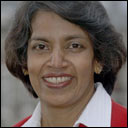
Acting BBC Chairman Chitra Bharucha added: "The Trust must act in the public interest. We seek evidence to inform our discussions and reach our decisions through a mix of factual analysis and judgement. Governing a creative organisation on behalf of the public - whose BBC it is - allows for no other approach."
According to the BBC, under the its new charter and new system of governance, where the BBC is engaged in commercial services, the Charter and Agreement recognises that "although the BBC's commercial services must "fit with the BBC's Public Purpose Activities" they are not necessarily (but may be) delivering the public purposes and are not publicly funded."
Commercial activities must meet the four criteria set out in the Agreement: fit with the BBC's public purpose activities; commercial efficiency; must not jeopardise the good reputation of the BBC or the value of its brand; comply with fair trading and avoid distorting the market.
The Trust also revealed that within the next week or so it hopes to lay out its conclusions over the planned free satellite service dubbed Freesat.
"Further to detailed scrutiny at its Finance & Strategy Committee and the provision of further independent advice, the Trust considered the proposal in detail at its meeting yesterday," it said in a statement.
It went on: "The Trust expects to publish its provisional conclusion soon, together with supporting evidence, and open a 28 day consultation before reaching its final decision."
Under the terms of the BBC's new charter, broadly speaking only "strategically significant decisions or those worth more than £50m" have to be overseen by the Trust.
· To contact the MediaGuardian newsdesk email editor@mediatheguardian.com or phone 020 7239 9857. For all other inquiries please call the main Guardian switchboard on 020 7278 2332.
· If you are writing a comment for publication, please mark clearly "for publication".
