
Two 1960s radicals who, in their different ways, opened people's eyes are to receive one of the world's richest arts prizes from the most unlikely of patrons of the avant garde, the Japanese royal family.
The painter Bridget Riley and the film-maker Ken Loach are each to receive the £85,000 Praemium Imperiale.
The equivalent of a Nobel prize, its previous British winners include Lord Attenborough and the late Sir John Gielgud - but this is the first time two Britons have won in the same year.
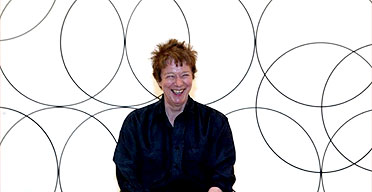
Riley is a pioneer of Op Art, and her often eye-popping canvasses have been credited with creating an abstract visual language. She is the subject of a current retrospective at Tate Britain.
She is also the first British woman chosen for the prize, though 35 years ago she was the first woman to win the international prize for painting at the Venice Biennale.
Yesterday she said that prizes were welcome, but were not what got her out of bed in the morning.
"It comes out of the blue and is very delightful in that way. It is not the kind of thing one hopes for, aspires to, or works for.
"It also means something to the people who have believed in and supported my work in difficult times; so I am grateful for this too," the artist added.
Loach has been the conscience of British cinema since 1965 when Cathy Come Home, his BBC play, caused a furore and led to the establishment of the charity Shelter.
He was equally modest.
"I have to keep saying it, although it's a cliche, that films are a collective effort and I have not made a single film where I've been without a group of friends and writers and actors, and together we have done what we have done."
Even so, the director of such classic slices of romantic realism as Kes, Raining Stones, and My Name is Joe, said of his prize: "It is very flattering."
Despite the success of his films, which often use non-professional actors, Loach's career has often been hand-to-mouth, with his work more appreciated by audiences abroad than here.
An unapologetic socialist, he has always seen his work as a voice to the powerless and downtrodden, whether they be foul-mouthed builders in Riff-Raff or Mexican illegal immigrants in California in Bread and Roses.
This has brought him into conflict with the government and vested interests - from Cathy Come Home to his indictment of rail privatisation, The Navigators. Some Scottish commentators condemned his most recent film, Sweet Sixteen, for painting too grim a picture of delinquent teenagers in a post-industrial community on the Clyde.
He and Riley will be honoured alongside the Italian conductor Claudio Abbado, the Italian sculptor Mario Merz, and the Dutch designer and architect Rem Koolhaas at a ceremony in Tokyo in October. They will also be granted a private audience with the emperor.
