
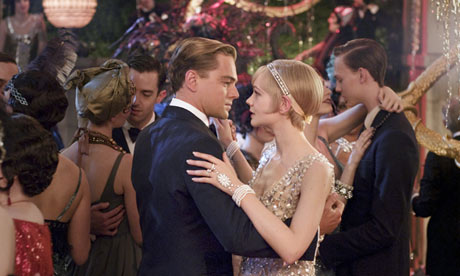
Today, finally, Australians will be able to head to the cinema and see Baz Luhrmann’s The Great Gatsby.
I’ve been waiting quite a while for this day. I previously worked in the film policy area of the Office for the Arts and back around 2008 – after Luhrmann's previous film, Australia, was released – word filtered down that his next project was to be Fitzgerald’s Great American Novel. I’m also a bit of a literary buff (OK, literary snob) so I’m always interested when someone decides to adapt a classic novel.
But here’s the thing: why are we almost the last place in the world to see it?
People in places as far flung as the Dominican Republic and Georgia got to see it two weeks ago. Great for them – and pretty much the rest of the world – but, unlike Australia, they didn’t put up nearly 40% of the cash to make the film!
The Great Gatsby, by all reports, is a beneficiary of the producer offset – a 40% tax offset against all money spent in Australia making the film. Given the budget for the film is listed as around $190m, that means it will receive a tax offset of around $75m-$80m.
Surely that money should buy us a seat in the cinema before someone from Kuwait?
Because a taxation offset is covered by tax secrecy laws, we won’t know the precise figure that Gatsby will receive. The laws are so tight that neither the Government nor Screen Australia could even admit that the film has received the offset unless (according the legislation) the information is “already available to the public”. Thus in Screen Australia’s media release on the film, it is Baz himself, not Screen Australia, who cites the producer offset as the reason for making the film in Australia.
But – and here’s the rub – to qualify for the offset a film must be Australian. So just how Australian is The Great Gatsby?
To be eligible for the producer offset you need to pass the “Significant Australian Content Test”. The SAC Test though isn’t just about the content of the film. When the policy was devised (in the last year of the Howard Government in 2007) they wanted to free producers from the idea that there should be possums in every other scene, and some bloke coming on and saying “Strewth” before departing stage right.
So while the content, and nationality of the actors and crew comes into play, an important part of the test is the “creative impulse”.
Luhrmann would have needed to prove that it was his idea to make the film, and that he is not just some director for hire. Screen Australia suggests the test is: “whether a film is Australian in its DNA, rather than whether it has kangaroos in it”.
Personally I think this is a mature approach. If we want big-budget films made by Australians in Australia we need to realise that our market is small compared with the rest of the world. Financiers will only put up big money if a film will play as well in Peoria as it does in Parramatta.
And given my favourite Australian novel is Thomas Kenneally’s Confederates which is set during the American Civil War, I’m quite open minded on what constitutes an Australian story.
But has the producer offset been successful? Well that depends on how you measure it. Certainly production budgets are up.
Screen Australia notes that since the introduction of the offset, “Australian narrative production increased overall – by 70% for feature films and 36% for television drama”. It also notes that Australian producers now retain “more than 25% equity share in their films” – meaning they still own a piece of their work, rather than, as previously, having to effectively sell off their stake in the film just to finance it.
But while the combined production budgets of films, TV dramas and documentaries is up …
… the production budget for only feature films is a bit more up and down (due to big-budget films like Australia and The Great Gatsby dominating the years in which they are made).
In terms of box office things are less picturesque. Since 2007, Australian films have been largely stuck at around 4-5% of total Australian box office. And this year, Goddess, the top Australian film at the box office, only took $1.6m – making it only the 50th most popular film in Australia this year – although there are more Australian movies to still be released.
The other issue is economic. Spending money on films does produce a multiplier effect that creates other jobs. But does spending $75m on The Great Gatsby create more work than spending that figure on a sector of the manufacturing industry? Probably not.
The difference is that film has a cultural aspect. Without such funding we would have no film industry. The question then becomes, does The Great Gatsby give us good cultural impact bang for our buck?
No doubt if the film is nominated for any awards it will be categorised as an Australian film. But will anyone outside of Australia think that? And does that matter?
