The arts and culture allocation from the spending review - "an increase" according to the chancellor, later described by the Department of Culture, Media and Sport as "a flat real settlement rising with inflation over the next three years" - might not sound very exciting, but the sigh of relief from the sector was unmistakable.
Tate director Sir Nicholas Serota, who has left no government arm untwisted that came within his grasp in the last year, said: "We are delighted that the government has endorsed its commitment to culture and arts by this significant increase in the budget for the DCMS."
John Woodward, chief executive officer of the Film Council, was elated: "As a result of today's announcement, the landscape for film, the arts and UK culture looks much brighter."
But David Barrie, outspoken director of the Art Fund charity, was much less sanguine: "The government has been playing the old, old game of threatening spine-chilling things, so when the eventual outcome is merely not very good, people are mighty relieved," he said. "But this is standstill funding at best, it is not good news for the national museums and galleries, whose costs have been rising very much faster than the retail price index."
The devil in the details will only become visible in the next few weeks, and the biggest horns, as ever, are on the imp labelled "2012 Olympics". But standing still, with the promise of increases matching inflation, as opposed to sliding back down a slope of solid gains in the last decade, looks like a small, but real, victory.
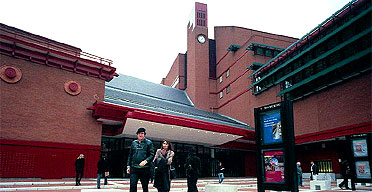
Yet for sectors including big heritage projects and small community arts schemes, already badly hit by Olympic raids on lottery funding, standstill funding will not be enough to repair real damage. Over the past 18 months everyone, from museums to opera companies to the British Library, had been invited by the government to consider the consequences of budget cuts of five per cent or worse.
It didn't take a crystal ball to predict these: shorter museum opening hours; abandoned film, dance and drama projects; redundancies across the sector, standstill wages already pitifully low compared to the private sector and consequent industrial unrest; and the inevitable increase of charging for non-core exhibitions and events.
There has even been muttering that some free national museums would at least contemplate reinstating charges: today Mr Darling unequivocally scotched this, declaring that his settlement "guarantees ... free access to museums and galleries."
It remains to be seen how the budget actually breaks down across the many clients of the department: English Heritage in particular, which has increased responsibility in the revised listing system but has already suffered a cut in real terms, will be waiting apprehensively. The Historic Houses Association - whose members will inevitably be hit by a squeeze in English Heritage grants - sounded a warning: "Clearly in the 2007 spending review we are not all starting from the same place," a spokesperson for the Association said. "The figures show a strong argument for a greater share to be directed to support for the heritage."
The biggest known unknown came when the Chancellor said the review "will deliver the Cultural Olympiad in the run up to London 2012". Whether that deliverance will come from slicing everyone else a slightly skinnier piece of cake is yet to be seen.
Sandy Nairne, director of the National Portrait Gallery, was one of many who welcomed the settlement, but with an unmistakable note of caution: "It sounds like very good news," he said.
"We have all been arguing that we want to build on recent success, and we hope that this will give us the opportunity to ensure that our culture is world-class and open to all."
Ranks of museum and gallery directors, filmmakers and theatre managers, orchestra leaders and ballet dancers, could have joined in as a chorus.
