Almost by decree, British actor Tom Wilkinson turns up in mutton chops to play an American senator in Robert Redford's starchy period piece The Conspirator. Has Tom pinched those whiskers from the Hollywood props cupboard, forcing studios to cast him in every historical movie just so they might wrench them back off him during make-up? He's clearly too quick for them. I swear Tom Conti did a similar thing and nicked the FilmFour moustache back in the 1980s. He never gave it back either – he just secretly handed it on to Alfred Molina. I hear the 'tache now lives in Malibu and has its own agent.
This may be off the point, but Redford's film is so boring and pious that a spot of levity feels necessary. Actually, the film begins with a joke as James McAvoy, injured on a civil war battlefield, banters to wounded comrades. Before he can finish the gag, though, they're all rescued by medics and we plunge into a laboured reconstruction of the 1865 shooting of Abraham Lincoln at a Washington theatre by the actor John Wilkes Booth (played, rather surprisingly, by British actor Toby Kebbell from Dead Man's Shoes and Control).
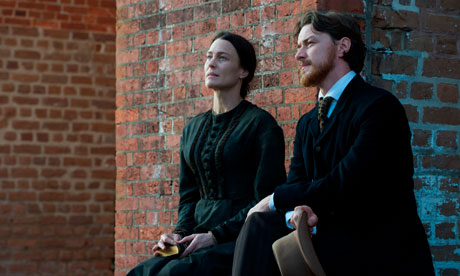
The film's concern is the aftermath, when the depth of the conspiracy to assassinate the president becomes clear. Redford studies the plight of Mary Surratt (a scarcely recognisable Robin Wright), owner of the boarding house where the conspirators met, now accused of complicity in the plot. McAvoy is the young lawyer Freddy Aiken tasked with defending her amid a climate of public hatred and against a prejudiced military court.
It unfurls as a stodgy courtroom drama, in which everyone looks like an early photograph. The "good" characters, however, are bathed in pools of golden light, as if the fair-haired Sundance Kid himself were acting as a some kind of lighting reflector. It's not hard to fathom his customarily liberal agenda here – that everyone deserves a fair trial, even after 9/11 – but all drama, like the colour, has drained away.
The end credits inform us that Aiken soon after quit the law and went to work on the first editions of the Washington Post – the newspaper, of course, where Redford was once so thrilling, as Bob Woodward in All the President's Men. And we never do get to hear the punchline of that opening joke.
