Director: David Lynch
Entertainment grade: B
History grade: C+
Joseph Merrick was born in Leicester in 1862. From around the age of five, he began to develop a serious and progressive physical deformity. By the time he had reached manhood, he was appearing on the sideshow circuit as the Elephant Man.
Wildlife
The film opens with a screaming woman being terrorised by elephants. It looks like an art-house flourish, but it is part of the history. Merrick claimed that his mother, when pregnant, had been frightened by a rampaging elephant. Some biographers of Merrick have laughed gently at the idea that elephants rampaged around the East Midlands but, reportedly, one did escape from a circus in Leicester in 1862. So, while it's safe to say that it didn't cause Merrick's condition, the real elephant is a legitimate part of the story.
People
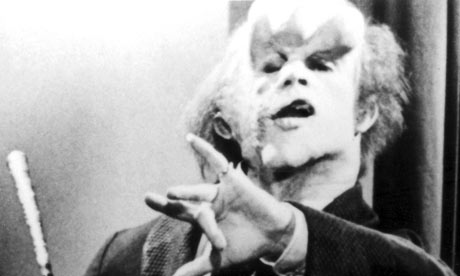
London surgeon Frederick Treves (Anthony Hopkins) ventures into the darkest, clankiest, smokiest parts of the East End to view the Elephant Man (John Hurt), whose physical appearance in the film is precisely accurate. The Elephant Man is exhibited by a villain, Bytes, who treats him viciously. Treves attempts to communicate: "Now, your owner tells me – I mean, the man who looks after you – tells me that your name is John Merrick and you're English. Is that right?" No. His name was Joseph Merrick. To be fair on the film, though, the real Treves got that wrong in his memoirs.
Business
Treves claimed that the showman on whom Bytes is based, Tom Norman, spoke to Merrick "as if to a dog". In the film, Bytes is also a violent sadist. But historians have pointed out that Norman's rudeness may have been part of the act, in which Merrick pretended to be a half-human, half-elephant from Africa, and Norman his captor. In real life, Merrick chose to exhibit himself, was treated well at the sideshow and established an equal financial partnership with Norman – apparently a decent man. During 22 months of work, Merrick managed to save £50 from his earnings, around a year's income for a working-class family at the time. It's interesting that the film – and Treves – present Merrick as having no control over his sideshow career. Perhaps they think he will be more sympathetic if portrayed as a helpless victim. In real life, Merrick's enterprise and gumption made him an even more remarkable person.
Travels
The film switches the chronology of the real story around, so Merrick is taken in by the Royal London hospital, then kidnapped by the wicked Bytes, carried off to Belgium and locked in a cage with angry baboons. In real life, Merrick went to Belgium by choice after the tide of public taste turned against freak shows in Britain. His new business partner there, an Austrian, did not lock him in a baboon cage, but he did rob him. It is true, then, that Merrick made his way back to London in a state of distress. The horrible scene at Liverpool Street station in which he is set upon by a mob is accurate. In real life, only at that point was Merrick admitted to the London hospital.
Romance
At first, Merrick can't speak, so he is dismissed as an imbecile. As he begins to learn, Treves realises that the Elephant Man is not only sane but, as he put it, "a gentle, affectionate and lovable creature, as amiable as a happy woman". Treves claimed, as the film illustrates, that Merrick's "transformation" was brought on by his romanticised relationships with women, including Princess Alexandra, the actress Madge Kendal and, though she doesn't appear in the film, Queen Victoria herself. The film's depiction of Merrick's life in the hospital, and his desire to be a decorous young man about town, is its most moving and most accurate aspect.
Verdict
The Elephant Man is a mostly faithful version of Treves's memoirs, but the real Joseph Merrick was a stronger character than either Treves, or the film, allows.
