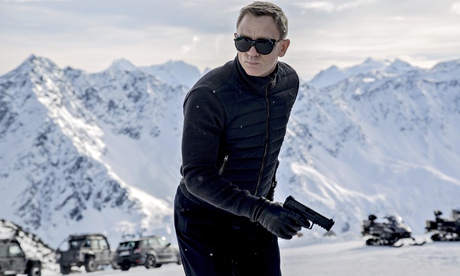
The latest long-awaited James Bond film is out tomorrow. Aside from a gripping plot, brilliant special effects and the principal actors Daniel Craig and Naomie Harris, will you notice the editing between each shot? Probably not: cuts in films are not distracting, as we already switch our vision off during eye movements, which stops us from seeing lots of blurs. So our view of the world is made up of short sequences cut together just like a movie.
If something remains the same over time, it literally becomes harder and harder to ‘see’. Scientists attached an optic stalk on to a contact lens and used it to project an unchanging image into the subject’s eye so that the picture was completely stabilised on the retina. No matter how dramatic the image, it could only be seen for a few seconds before it disappeared from vision.
The image was still there, but the subject could no longer see anything - just blank light, until the image was changed even slightly. This never happens in real life, because our eyeballs are always jiggling - which is just as well for Bond fans.
Dr Daniel Glaser is director of Science Gallery at King’s College London
