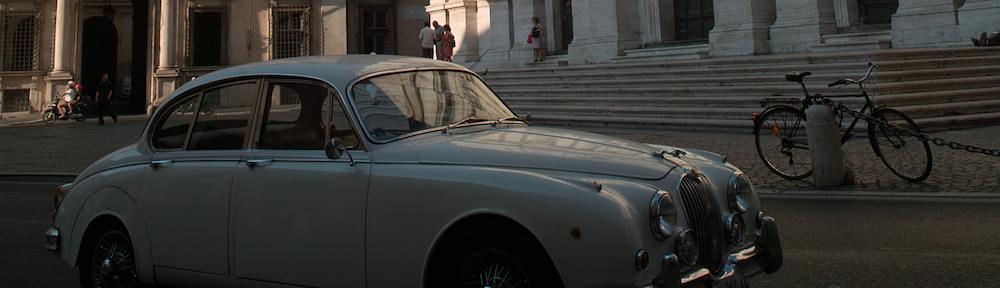

In the first Back To The Future film, the hero, Marty McFly, only went to the past, and then returned to the 1980s, which was the present day. But the 1989 sequel sent Marty right into the future – one so very futuristic that people used flying cars and automatic shoelaces, and we, as children watching it, had our tiny minds expanded. Yep, he travelled to 21 October 2015. Also known as next Wednesday – truly, the future is now upon us. If only Marty could have known how advanced tech would really be today.
He could not possibly have imagined the convenience of mobile phones; always being able to get hold of somebody to arrange a meeting, and then to text that you’re running an hour late, and then to text again to postpone altogether, and to keep rearranging and cancelling meetings for a further fortnight until your soul breaks free from the pathetic lie that you are ever going to see this person again.
He didn’t know dictionaries would be forgotten once we could simply Google the correct spelling of manoeuvre, a word that, until the existence of the internet, I actually knew how to spell. He was unaware that you would be able to order a takeaway pizza by pressing four buttons on an app on a phone, as I did last week. Four buttons! OK, so the pizza took an hour and 40 minutes to arrive, by which time I had passed out, so I sort of sleep-ate my way through the metallic tang of green peppers on the turn. But still, I cannot wait to tell my grandchildren how I was an early adopter of silently summoning total strangers to drive rotting vegetables surrounded by dough to my front door, very, very slowly.
Now, when I wonder what the next 25 years will bring, I think instantly of robots gaining sentience and taking over the world, which is pretty stupid. I’m not saying that artificial intelligence isn’t a thing. I’m saying that what we really need to think about, when imagining how things are going to pan out, is how to leave our own past behind, gracefully. Life isn’t Back To The Future, with its techno dreams. It is a process of growing and changing, and not wanting the ground to open up and swallow you when somebody gets out a photo of the person you were when you saw Back To The Future Part II.
Personally, I feel an overwhelming sense of embarrassment when thinking about pretty much anything I have said or done in my life. I find nostalgia hard to distinguish from one big anxiety dream. This is something I need to relax about, because it can accumulate in disastrous ways. Matt Haig writes, in his book Reasons To Stay Alive, about having a breakdown, which he describes as “a kind of breaking through. As though, if you find it hard enough to let your self be free, your self breaks in, flooding your mind in an attempt to drown all those failed half-versions of you.”
These are wise words, if you’re still jostling with those failed half-versions, and all the unfinished things you tried to be. The trick is to treat them with good grace and generosity, as you surely would the youngest person in the room. Forgive them. Giggle at them. After all, they’re all so much younger than you.
When I was a child, I dreamed of writing a book. By my 20s, I was trying to do it. I would stay up late after work, filling endless notebooks with ideas on how to structure it, and then decide I had the wrong kind of notebook and I would have better ideas if I bought ones that were unlined. I filled up several computers, each of which eventually broke; their hard drives are stacked up in boxes that I always intended to deal with. I still have them. Every new idea was harder to enjoy, because it got caught in the traffic jam of old ones. My 30s have carried on in a similar fashion, with the mounting backlog of versions of myself and my plans climbing on to my back to nag, like Philip Larkin’s toad.
But now, with eight months left until I turn 40, I’ve decided to start at the beginning and write a different book. And, this time, I hope it will be wonderful. I’m going back to the future me.
