Musicians have long been drawn to the cinematic myths of the old west. From the singing cowboys of early sound cinema (Ken Maynard, Gene Autry et al) through such big-screen Elvis vehicles as Flaming Star (1960) and Charro! (1969), to Glen Campbell in True Grit (1969) and Bob Dylan in Pat Garrett and Billy the Kid (1973), the western has proved the natural home of the troubadour.
More recently, Australian rocker Nick Cave has done some of his very best work writing and co-scoring The Proposition (2005) and even having a cameo as a storytelling saloon singer in The Assassination of Jesse James by the Coward Robert Ford (2007), on which he collaborated once again with long-term musical compadre Warren Ellis. Little surprise, then, that this first feature from former Beta Band musician John Maclean should be a western, albeit one more tinged by the clanging Neil Young guitars of Jim Jarmusch’s Dead Man (1995) than the classic canon of John Ford and Sam Peckinpah.
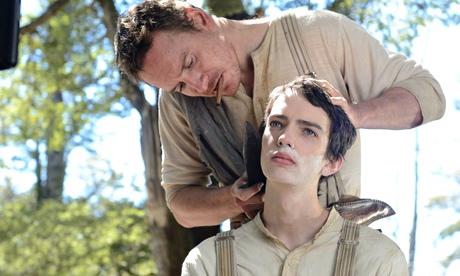
Described by writer/director Maclean as “a European road movie” with “fairytale” inflections that is “mostly about young love”, Slow West plays out in late 19th-century Colorado (actually 21st-century New Zealand), a land of wandering European immigrants and savagely mistreated Native Americans. Into this melting pot comes Jay Cavendish (Kodi Smit-McPhee), a naive 16-year-old Scot searching for his lost love, Rose Ross, played with impressive dexterity by Caren Pistorius. Armed only with a “West, Ho!” handbook, wide-eyed Jay saddles up with world-weary guide Silas Selleck (Michael Fassbender, with whom Maclean worked on the shorts Man on a Motorcycle and Pitch Black Heist). Silas believes that danger lurks beneath every rock and has his own mercenary reasons for wanting to track down the rambling Rose.
With its weirdly lyrical portrait of frontier life, this blackly comic oddity balances on the generic knife edge between the western and the musical. From the opening moments, our antiheroes are accompanied by a gently waltzing three-step, Jed Kurzel and the London Contemporary Orchestra turning their hoofbeats into a lilting dance. Significantly, some of the film’s music is diegetic; an early encounter with three men joined in Congolese song prompts Jay to note that love, like death, is universal – the key to the unfurling narrative.
Later, Jay stumbles drunk upon a campfire where a banjo-picking Bryan Michael Mills sings of thunder and the devil, echoing the Fair and Tender Ladies sequence from Debra Granik’s Winter’s Bone (2010) – mournful, threatening, otherworldly. Elsewhere, we hear the carnival wheezing of Lone Pigeon’s Aeolian Arrieta, while a Lynchian dream/premonition is played out to the music-box tinkling of an eerily processed piano.
With its plaintive, innocent abroad narrative and melancholy musical underpinning, Slow West reminded me of American Interior, Gruff Rhys’s film-and-music project that retraced Snowdonia farmhand John Evans’s quest to track a mythical Welsh-speaking tribe across the American plains. There’s something of Rhys’s ethnography in Jay’s encounter with Werner, an anthropologist documenting disappearing Native American culture, although Maclean gives this story a sardonic twist that confirms Silas’s sour view of human nature.
Saucer-eyed and elfin-faced, Smit-McPhee is the perfect foil for Fassbender’s seen-it-all worldliness. Together, they have odd-couple chemistry, not least in a sequence in which they tie a clothes line between their horses to dry their sodden duds, a routine that wouldn’t have looked out of place in Laurel and Hardy’s Way Out West.
Yet danger lurks beneath the surface, the clothes line also providing the comedic payoff for an expertly handled eruption of violence in which the trees of a haunted forest come to life in wince-inducing fashion. Throughout, killing is portrayed as tragically random and explosively brutal. A scene of a botched general store heist ends with a gut-wrenching confrontation that turns any sense of victory to shame, while the movie’s spectacular “Kill that house!” shootout gives way to a haunting montage revisiting the trail of death that has led us to this strange new world.
If this sounds portentously downbeat, then take heart – the gallows humour that runs through Slow West swerves from abstract slapstick to situation comedy, tinged with a blue-note of folksy regret. The performances are terrific, particularly Ben Mendelsohn’s raddled bounty hunter Payne, and cinematographer Robbie Ryan’s 1.66:1 framing keeps our focus on the faces rather than the scenery, bringing intimacy to the bloodshed, laughter to chaos, sweetness to unrequited love.
