Rather than do a list of the supposedly greatest documentaries of all time, which you can easily find online, this is a personal list of films that I love – sometimes for their content but also for how they are made.
Educating Essex (David Clews, 2011)
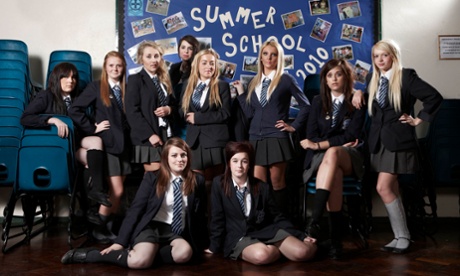
As the mother of teenagers, I often feel indignant that they are such a reviled social group. Educating Essex was fantastically watchable, but I mainly loved it for reminding us just how sensitive, thoughtful and funny teenagers are, and how badly they need to be understood. The series taught me to be a better parent, which is an amazing thing to be able to say about a TV programme.
From a craft perspective, there is currently a view that programmes like this, which use a rig of fixed cameras, can generate an authenticity and intimacy that a camera crew can never capture. I’m not sure I agree with this and my guess is that it was the quality of the film editing more than the way it was shot that made a difference, but either way it is a very special piece of work.
Bob Marley: Exodus 77 (Anthony Wall, 2007)
I spent a year in the West Indies in the 1980s and Exodus was one of only four albums I had on cassette in the little room in which I lived, so every track on this album is in my blood stream, which gives the film a very special resonance for me. This Arena film was made by Anthony Wall, who was my executive producer for a long time and is something of a genius in the cutting room. Not only is his cultural knowledge scarily encyclopaedic, but as a director, he is never afraid to experiment and take risks. These two qualities come together in this superb film about Bob Marley, a hypnotic and immersive film with a very brave structure, so inventive it’s almost trippy to watch.
Dogging Tales (Leo Maguire, 2013)
Leo began his career as a photographer and you can tell. His work looks breathtakingly original. His cinematography in his first film Gypsy Blood was exquisite, every frame superbly composed. By the time he made Dogging Tales, his storytelling had become more assured and again, you can see that he is a real innovator, using night-vision cameras in this film to capture something very dark and disturbing about very damaged people. The interviews are searingly honest, and I find it extraordinary that he was brave and committed enough to go in search of people in dark lay-bys in the middle of the night, and was able to win their confidence so that they would speak so openly to him.
Relics: Einstein’s Brain (Kevin Hull, 1994)
This is a clever and hilarious film. The main character in the film is Kenji Sugimoto, a Japanese professor of maths and science, who travels through America on a road trip in search of Einstein’s brain, which he eventually finds stored in three jars in a cupboard in Kansas. The film is so strange that many people took it to be a hoax, but it has always stayed with me as a reminder that it is possible to make very counterintuitive decisions about who can be the subject of a documentary. The main character speaks no English and throughout the film is barely able to communicate. I love the fact that Kevin constructed a whole film from such a wonderfully perverse starting point.
It Felt Like A Kiss (Adam Curtis, 2009)
This is by far my favourite Curtis film, and is the only one of his films as far as I know that doesn’t have a voice-over. It explores themes that are familiar from the rest of his oeuvre, but the absence of his voice and of a journalistic narrative allows his strength as an exceptional film editor and artist to shine through. Obviously he is an amazing magpie and finds endless archive treasures, but what I love is the mesmerising way he stitches images together, finding unexpected visual cadences and rhymes. His use of music is also pretty great.
The Fallen (Morgan Matthews, 2004)
Morgan is probably the most talented documentary director of his generation and I love his work, which is by turns funny, moving, empathetic and profound. He’s also an extraordinary craftsman and cinematographer – Taxidermy: Stuff the World (2005) was beautifully shot and edited. I have to choose The Fallen, though. At over three hours long, it’s a fantastically skilful and carefully modulated portrait of families whose relatives died in the wars in Iraq and Afghanistan. I’ve watched it again recently in connection with a film I’m making that has a similar structure and am totally impressed at how each brief cameo says something unique, surprising and above all poetic.
- Inside Harley Street is on BBC2 on Monday evenings; episode one is on iPlayer now
