
Don’t be fooled by the cliche. There is nothing more macho than a luvvie. When the likes of Ian McKellen and Anthony Hopkins protest, à la Larry Olivier, that the secret to acting is just pretending, dear boy, it’s supposed to sound modest. Actually, such dismissals are enormous primal roars, chest-pounding assertions of innate superiority: humblebrags done up as chatshow patter.
Increasingly, though, it seems this is not what we want from our performers. Public taste instead appears to favour a different kind of macho actor. One who embraces sweat and effort, toil and strain. One who puts in some welly.
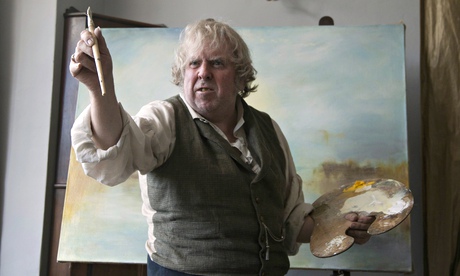
Hence the impressed coos that greeted the news Timothy Spall actually learned to paint in order to play JMW Turner in Mike Leigh’s biopic. Well, I say learned to paint – he already knew how to paint, having specialised in it at college and spent 40 years dabbling as an amateur.
But he studied quite intensively for two years so that when the time came to fake it, he could do so with more panache. John Travolta did the same for the forthcoming art heist drama The Forger. Both men speak proudly in interviews of hanging their surprisingly accomplished grandmaster copies on the wall at home. Such stories are dutifully reprinted in papers and repeated by punters, before entering movie folklore.
When an actor learns or perfects a skill in the service of a movie role, the publicity machine can all but kick back and turn on the autopilot. Such stuff is gold because it feeds our illusions about the truth of fiction and the mystique of performance. It’s 35 years since Robert De Niro played a boxer for Raging Bull, but the legend endures to this day of how his trainer said he could have been a contender, had he not gone back to the day job. Ditto Daniel Day-Lewis in The Boxer (coach Barry McGuigan: “Right after the movie was made he could have gone in and fought professionally”).
We lap up tales of extreme weight loss or gain in the service of maximum realism, of intensive musical training so the hand double can be dismissed. Take a bow, Geoffrey Rush in Shine, Jamie Foxx in Ray, Romain Duris in The Beat my Heart Skipped, and Miles Teller in the jazz drumming drama Whiplash (out next January).
The curious thing is that we seem happy to have the curtain pulled back on behind-the-scenes efforts in order to heighten the onscreen illusion. Our enthusiasm for Spall’s painting project comes from the current craving for authenticity above all else. That, after all, is why he’s starring in a Turner biopic rather than just a made-up story about a boozy Victorian artist. We’re in a period in which we want our stories bolstered by the belief that they are true to the facts; and where part of the process of consuming them is logging on to Wikipedia to see where truth and fiction diverge. Knowing that Spall put in this kind of legwork helps further narrow the gap. It also helps divert us from the unwelcome news that events and characters have had to be manipulated to spin a good yarn. Facts must be massaged, but we can console ourselves that all those hours spent slaving away in front of an easel helped count towards an innate artistic truth.
Plus, of course, as movie consumers, we like getting value for money. Just as a three-hour running time helps reassure people that they are getting bang for their buck, so we enjoy the sense that we are rewarding not just the movie, but months of prior hard graft. If actors make sacrifices on our behalf, we feel gratitude as well as respect. Actors themselves like to go through purgatorial experiences to prove their seriousness.
Yet those professionals in the field who are not in the employ of the publicity company, or who haven’t personally been involved in coaching actors, tend to pour scorn on their attempts. They’re holding the brush all wrong, they say; they’d never have left-hooked like that, or played an F sharp with their little finger. This too is part of the circus. For much as we might like to believe differently, everyone knows that two months – or even two years – of intensive training does not a genius make.
Movies about people such as Turner depend on the notion that their talent is more mysterious than just hours clocked. Biopics aren’t about showing that our heroes are like us, but about showing that they’re superhumans whose existence compensates for the inadequacies of the members of our species we see around us.
We don’t want to think creative virtuosity is simply a case of application – acting included. Spall’s painting practice doesn’t show we could do his job: that, with the right togs and teacher, we could convincingly play Turner.
It shows that Spall is different from us not only because he has the magic power to act, but that this magic mysteriously empowers him to do other unlikely things, like pick up other magicians’ kinds of magic. Just as we want Turner to be a superhero, we want actors to be superior beings, too. “Why not try acting, dear boy?” Olivier sneered at Dustin Hoffman. Easier said than done.
