Fruitvale Station (2013)
Director: Ryan Coogler
Entertainment grade: A–
History grade: A–
On New Year's Day 2009, an unarmed African-American man called Oscar Grant III was fatally shot by transport police at Fruitvale station on San Francisco's Bay Area Rapid Transit (BART) system. The shooting was filmed by several bystanders on their mobile phones. The incident sparked protests, some violent.
Context
Many historical films deal with grand events, like wars or revolutions. Fruitvale Station is a quiet, unassuming story about the shooting of one ordinary man. In context, though, it is part of a significant historical story. It is estimated that one in three black men in the US today will be incarcerated at some point in their lifetimes; a report by one activist organisation has claimed that a black man was killed by police, security guards or self-appointed vigilantes every 28 hours in 2012. Fruitvale Station was released in July 2013 – coincidentally, just as George Zimmerman was acquitted of murdering black teenager Trayvon Martin.
Fruitvale Station feels all too relevant again this week. Protests in Ferguson, Missouri have been met with an extraordinary police crackdown after unarmed teenager Michael Brown was fatally shot by police on Saturday. Other cases have also made headlines in the last few days. John Crawford, a father of two, was fatally shot at a supermarket in Ohio by police while holding an air rifle. Ezell Ford was fatally shot by police in Los Angeles; he was unarmed and reportedly suffered from a mental illness. Though Fruitvale Station focuses on just one story, it relates to a much wider narrative.
Reading on mobile? Watch the video for Fruitvale Station
People
Fruitvale Station opens with real cameraphone footage of the events of 1 January 2009, then flashes back to explore the final day in the life of 22-year-old Oscar Grant (played with superb realism by Michael B Jordan, previously seen in The Wire and Friday Night Lights). Though dramatic licence has been used in the reconstruction of these events, the facts are straight. Grant had recently been fired from his supermarket job; he had a girlfriend (played by Melonie Diaz, also excellent) and daughter; his past included selling drugs and spending time in prison. Accusations that the film makes him simplistically heroic are absurd. Grant is shown to be a complicated character, whose thoughtfulness and kindness are balanced by a too quick and sometimes uncontrollable temper (taken out on his mother and his ex-boss) and a tendency to lie (he has cheated on his girlfriend, and pretends he hasn't lost his job).
Invention
There is only one scene which might reasonably be said to go a bit far in making Grant sympathetic, in which he comforts a dog after an accident. The scene is fictional. Some viewers have found it too manipulative. It is unlikely to trouble historians, though. While it might make a slight difference to viewers' perceptions of Grant, it's hardly a historical travesty on the level of, say, setting a film in the wrong era with the wrong people (Apocalypto), attributing a major wartime breakthrough to the wrong nation (U-571) or viciously slandering everyone in the 16th century (Anonymous).
Violence
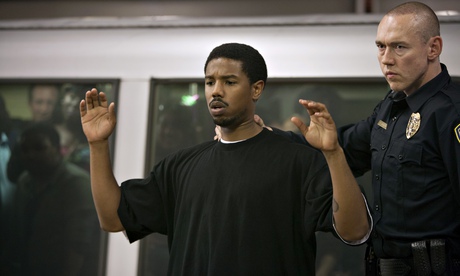
The film builds towards its crucial final scene at Fruitvale Station. There is a fight on the train, and the BART police arrive. Though the events on the platform were filmed by several people present, the exact details remain controversial – and the film does not use the real names of the police officers involved. One video has been said to show an officer striking one of the detained men, identified by some as Grant; the officer's attorney disputed that analysis. Grant was shot in the back by Officer Johannes Mehserle. Mehserle's defence argued that he mistook his gun for his taser. The jury convicted him of involuntary manslaughter – a lesser charge than the second-degree murder or voluntary manslaughter options that the judge had also offered. The film depicts the scene as confusing. Its focus is on the impact on Grant's family and friends, not on what the officers thought or did.
Verdict
Fruitvale Station is a fair portrait of Oscar Grant's story, and a brilliant portrait of how lack of opportunity, routine incarceration and racism conspire to devalue the lives of young black men in America.
• Fruitvale Station is available on demand from 29 September and on DVD and BluRay from 6 October
• More from the Reel history archive
