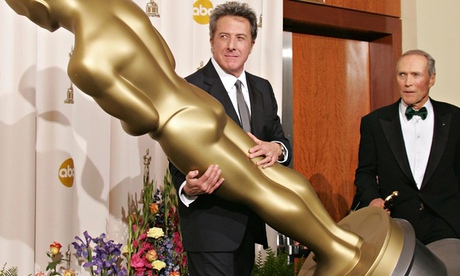
The world needs many things. Love, sweet love. World peace, renewable energy. An end to child poverty. One thing it does not need is another set of awards celebrating the best in cinema. That cup overfloweth. Barely a night goes by without a red carpet getting an airing somewhere in the world.
But when your job is to report on such ceremonies, what starts to strike you most is how similar they are. The same people tend to be nominated, in the same categories. The same issues niggle, the same injustices are wreaked, year after year, by awards body after awards body.
The one consistency seems to be that they bear little relation to the experience of actually watching films. Of booking the babysitter, schlepping to the cinema, parting with your cash, sitting through the ads then chewing it over the next day.
When people do discuss movies, they tend not to talk in terms of sound editing and cinematography. When they weigh up which performances were good, they generally don't first assess the women, and then move onto the men. Rather, they quote back killer lines, or laugh at duff scenes. They assess whether the trailer sold them a pup, and the quality of the popcorn. If they happen to see a movie in a different language, they don't just compare it to other films that happen to not be in their native tongue. Likewise with documentaries. Audiences care about whether a movie is good, not what genre it is.
That's why we felt that the world could cope with one more set of film awards. One that aimed to rethink both the stakes and the jury, to level the playing field and let you call the shots. And so we present the inaugural Guardian Film Awards. We've tried to make our categories more inclusive – so best picture and best director are open to fact, fiction and foreign language. It's Guardian style to refer to any actor, whatever their gender, by the same term, and that's why our best actor and best supporting actor categories are open to men and women.
Most traditional award bodies have categories for screenplay, editing, cinematography and so on. Ours don't. Not because they're not vital roles, but because we want to approach things from a different angle. That's why we do have awards for best scene and best line of dialogue, for instance. Our hope is that in treating movies a bit more microcosmically we might highlight the work of writers and technicians other than the same names that tend to dominate traditional awards.
We've also got prizes for best marketing campaign – which looks to rate the integrity and efficacy of the means by which most people first learn of a film – and for biggest game-changer. As the nominees show, this could be CGI innovation (Gravity), distribution (A Field in England was simultaneously released on multiple platforms), or even methods of funding (The Internship was bankrolled by Google). Just because a movie isn't great doesn't mean it hasn't altered the landscape.
Now it's down to you. We need readers to whittle these longlists down to a shortlist of five in each category. The top-ranking reader favourite will also count for the casting vote when the judges meet next week. Voting ends at noon this Sunday. Use your powers wisely … and soon.
Voting closes at noon on 16 February.
You'll need to sign in to vote. But don't worry if you haven't registered yet: it takes less than a minute and it means you can get even more involved with the Guardian – from sharing your comments, photos and videos to tailoring the news and views we send you.
